
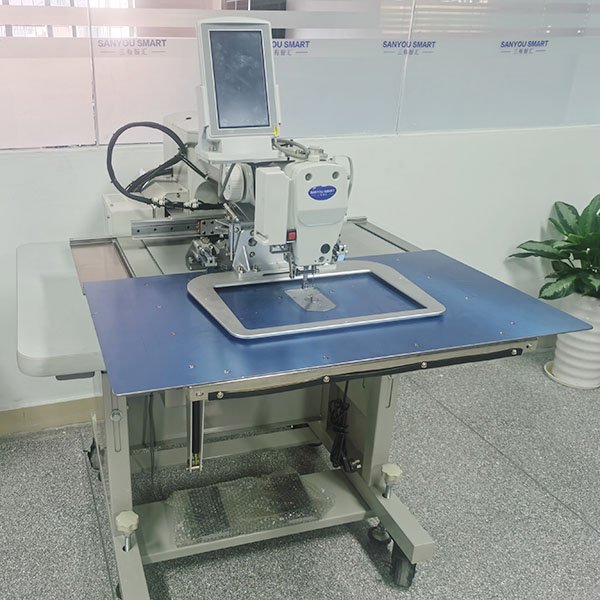
Troubles with Computerized Sewing Machine Maintenance? Pick the Right Brand to Cut Maintenance Costs at the Source
In modern sewing production workshops, computerized sewing machines (also known as CNC pattern sewing machines) have become core equipment for manufacturers of footwear, bags, leather goods and other products. However, many enterprises using imported machines are plagued by long maintenance lead times, expensive spare parts and slow technical support responses. Once production lines grind to a halt due to equipment breakdowns, companies face not only repair expenses but also knock-on losses including delayed orders and lost clients. How to avoid such risks at the equipment selection stage? A growing number of manufacturers are opting for domestic brands with independent proprietary technology and comprehensive service systems as a wise solution.
I. Three Major Pain Points of Maintaining Traditional Imported Computerized Sewing Machines
1. Sky-high Maintenance Costs for Imported Equipment
While international-brand pattern sewing machines deliver stable performance, their replacement parts usually need to be ordered overseas. The procurement cycle can stretch for weeks or even months, and a single key component may cost thousands of yuan. For small and medium-sized manufacturers, such maintenance expenses account for a large share of the equipment’s total lifecycle cost.
2. Delayed Maintenance Response Caused by Technology Dependence
Some imported machines adopt closed-loop control systems that prevent in-house technicians from conducting in-depth fault diagnosis, forcing companies to rely on brand-certified professional engineers. Cross-border service coordination is often hampered by time zone differences and language barriers, greatly prolonging repair waiting time and disrupting continuous production.
3. Difficult Upkeep of Outdated Models amid Rapid Equipment Iteration
As technology advances, early-generation computerized sewing machines are phased out of production, followed by shrinking spare part supply chains. If a company’s aging machines break down, it may face a shortage of replacement parts and have no choice but to scrap the whole unit.
II. Proven Technical Maturity of Domestic Alternatives
The domestic automated sewing equipment industry has achieved breakthroughs in both technical accumulation and market validation in recent years. Domestic manufacturers such as Dongguan Sanyou Automation Technology Co., Ltd. (brand: SANYOUSMART) boast core teams with over 20 years of experience in automated sewing equipment development. Their products feature technical capabilities that can replace international brands including Japan’s Mitsubishi, JUKI and Brother.
1. Independent and Controllable Core Technical System
The self-developed control system of SANYOUSMART adopts a closed-loop control architecture. A servo spindle motor drives sewing operations, while closed-loop stepper motors paired with encoders control the XY axes and middle presser foot to track positions in real time and eliminate shifting and misalignment. This self-researched system supports all mainstream file formats on the market and enables customized function development based on client demands, completely breaking the technical barriers set by imported brands.
2. Cost Advantages for Easier Maintenance
Domestic equipment boasts prominent procurement cost advantages. Take SANYOUSMART products as examples: the SY-2210 model (220×100mm sewing range) is priced below 20,000 RMB, while comparable foreign models cost over 40,000 RMB; the SY-3020 model (300×200mm sewing range) costs less than 30,000 RMB, versus over 60,000 RMB for foreign equivalents. Lower upfront investment leaves enterprises with more sufficient maintenance budgets. Meanwhile, localized supply chains for domestic spare parts drastically shorten maintenance response times.
3. Full-process Technical Support Service System
Unlike the remote-only technical support offered by imported brands, domestic manufacturers deliver comprehensive technical training covering beginner tutorials, template making, machine commissioning and software operation. SANYOUSMART combines physical equipment delivery, software licensing and offline technical training to equip clients’ technicians with full capability to conduct routine maintenance and basic troubleshooting independently, realizing true self-control over production equipment.
III. Strategic Shift from Reactive Breakdown Repair to Proactive Preventive Maintenance
By adopting domestic equipment with transparent technology and fast service response, enterprises can shift from passive "breakdown repair" to a proactive "preventive maintenance" strategy:
1. Build In-house Technical Capacity
Systematic training provided by equipment suppliers helps companies cultivate internal technical teams proficient in equipment principles and control systems. These staff can not only handle daily maintenance but also optimize machine parameters according to production demands to boost overall equipment efficiency.
2. Optimize Spare Parts Inventory Management
Domestic equipment features highly standardized spare parts and responsive supply chains. Enterprises can build scientific spare parts inventory systems based on equipment operation frequency. Proper stock of key wearing parts enables instant replacement upon faults, minimizing production downtime.
3. Data-driven Equipment Health Management
New-generation domestic computerized sewing machines are generally fitted with 7-inch high-definition capacitive touch screens and other HMI panels to display real-time operating parameters. By archiving equipment operation data, enterprises can detect early warning signs of potential faults and carry out preventive maintenance before minor issues escalate.
IV. Industry Application Verification: Market Trends Reflected by Top OEMs’ Selections
Practical market performance is the ultimate test of equipment reliability. SANYOUSMART computerized pattern sewing machines have been deployed by OEM manufacturers serving major brands including Anta, Li-Ning, Skechers and Dr.Kong. These quality-critical brand clients recognize domestic machines for their simultaneous improvements in production efficiency and stitching quality, alongside substantial cuts in labor and maintenance costs.
For industries requiring single-needle lockstitch sewing such as footwear, handbags, luggage, leather goods, apparel, pet supplies and outdoor gear, the stability of computerized sewing machines directly determines production tact time. Technological innovations of domestic equipment deliver "skill decoupling": non-professional sewing operators can complete complex processes, lowering labor recruitment thresholds. Meanwhile, consistent stitching quality eliminates human operation errors to deliver uniform, neat stitches at high speeds and effectively reduce rework expenses.
V. Three Core Criteria for Rational Equipment Supplier Selection
Faced with numerous computerized sewing machine brands on the market, manufacturers should focus on the following key dimensions during selection:
1. Independent Technology and System Openness
Is the equipment control system independently developed? Does it support customized functional development? System openness determines a company’s room for future technical upgrades and its reliance on suppliers.
2. Service Response Speed and Coverage
Can the supplier provide localized on-site technical support? Is the maintenance response time kept within a reasonable range? These factors directly impact production losses caused by equipment failures.
3. Full Lifecycle Cost Calculation
Beyond upfront purchase prices, enterprises must comprehensively calculate spare part costs, maintenance fees and staff training investments. Some machines with seemingly low purchase prices may incur exorbitant long-term upkeep costs and prove uneconomical overall.
Conclusion
Amid global manufacturing supply chain restructuring, domestic substitution for core production equipment such as computerized sewing machines has evolved from an optional choice to a necessity. Adopting mature domestic brands with complete service systems not only reduces maintenance dependence and costs, but also helps enterprises build independent, controllable technical capacity to gain an upper hand in fierce market competition. The rise of domestic equipment manufacturers like Dongguan Sanyou Automation Technology delivers cost-effective, well-supported intelligent sewing solutions for Chinese manufacturers, steering the industry toward higher efficiency and sustainable development.
About us
Company Profile Corporate image Sewing case Video HonorProduct Center
Swing shuttle computer pattern machine Electronic accessories Spinning shuttle computer pattern machine Template engraving machine Mechanical partsNews Center
Company news Industry News FAQContact us
Service telephone: +86 136-1266-1799 Mechanical after-sales: +86 139-2680-8776 Electronic technology: +86 136-8952-3679 E-mail: sanyou-smart@outlook.com Address: 3rd Floor, Building 1, No. 46 ShimeiScan QR code
 Mobile station QR code


